Showing posts with label equipment. Show all posts

Wednesday, May 30, 2012

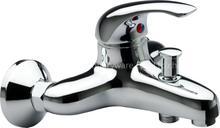
How to Repair A Leaking Shower Faucet?

Leaks in your Bathroom hose shower faucet not only wastes water, it also increases your water bill. Addressing the problem and repairing it as soon as possible is wise and earth-friendly. A leaking shower faucet is generally a sign that a part is worn out and needs to be replaced. The washers or seals are under pressure as water flows through them so it is normal that they typically wear out over time. With basic knowledge and tools, you can do the fixing yourself. Follow these steps:
Instructions
  • Locate the water heater at your house then shut off the water valves.
  • Go back to the bathroom, turn on the shower faucet and drain the excess water out.
  • Depending on the type of shower faucet you have, you may work on one or two valves. In this example, I'm showing a two-valve shower faucet whose washers need to be replaced. Unscrew the screws that hold the handle/knob off the shower faucet and take them both off (hot and cold).
  • Once the handle or knob is off, take the water guard off.
  • Unscrew the nut that is holding the stem in its place.Unscrew the shower stem in a counterclockwise direction.
  • Replace the rubber washer on the shower stem located at the end that goes into the pipe.
  • Replace the packing washer found at the middle section of the shower stem.
  • Clean any debris from the pipe and put the parts together in reverse order. Recaulk around the faucet guard to protect your wall from damage.
Tips & Warnings
  1. It's best to replace all the gaskets and seals at one time
  2. If you are not very familiar with replacement parts for your shower faucet, go to a hardware store to ask for assistance in finding the parts you need.
  3. If you are not sure how to do the repair yourself, ask a professional to do the job.
  4. If you have a gas water heater, you may need to relight the water heater pilot. Also, avoid taking more than two hours in your repair to prevent the water heater tank from damage.

Wednesday, April 18, 2012

The Disadvantages of Rubber Speed Bumps

Speed bumps are designed to control traffic and reduce dangerous situations. Speed bumps are commonly made from asphalt, but rubber speed bump made from recycled materials offers a more environmentally friendly alternative. Rubber speeds bumps are easier to install than their counterparts and are portable, unlike asphalt speed bumps. Despite their benefits, rubber speed bumps do have a number of disadvantages.
Additional Maintenance
Asphalt and concrete speeds bumps are installed on a permanent basis and require only minimal maintenance. Rubber speeds bumps, however, are not nearly as secure and require additional repairs. The installation components of rubber speed bumps can loosen from the vibration of heavy traffic, causing the speed bump to separate. In addition, markings on rubber speed bumps also require more frequent maintenance than asphalt speed bumps. Paint and traffic marking strips do not adhere as well to road marking machine as other surfaces.
Security
The installation of speed bumps can trigger a negative response from drivers. Rubber speed bumps are designed to be portable, so installing a rubber speed bump is a much easier task. While simple installation can be an advantage, it also means removing the speed bumps is a relatively easy process. As a result, residents or drivers against the speed bump installation can remove it using basic tool.
Deterioration
Unlike asphalt speed bumps which can remain in upstanding condition for years, rubber speed bumps can deteriorate quickly and even need replacement after a matter of months. Extreme heat and cold can greatly reduce the lifespan of rubber speed bumps. With wear, the joints begin to separate, creating potentially unsafe gaps. Edges deteriorate and begin to break away from the main structure. Heavy traffic also begins to break down rubber speed bumps with traffic grooves beginning to form. Deteriorating rubber speed bumps are a hazard to drivers and can cause significant damage to the roadway.